 English


Essential Tractor Checks Before Harvest Season | Complete Maintenance Guide
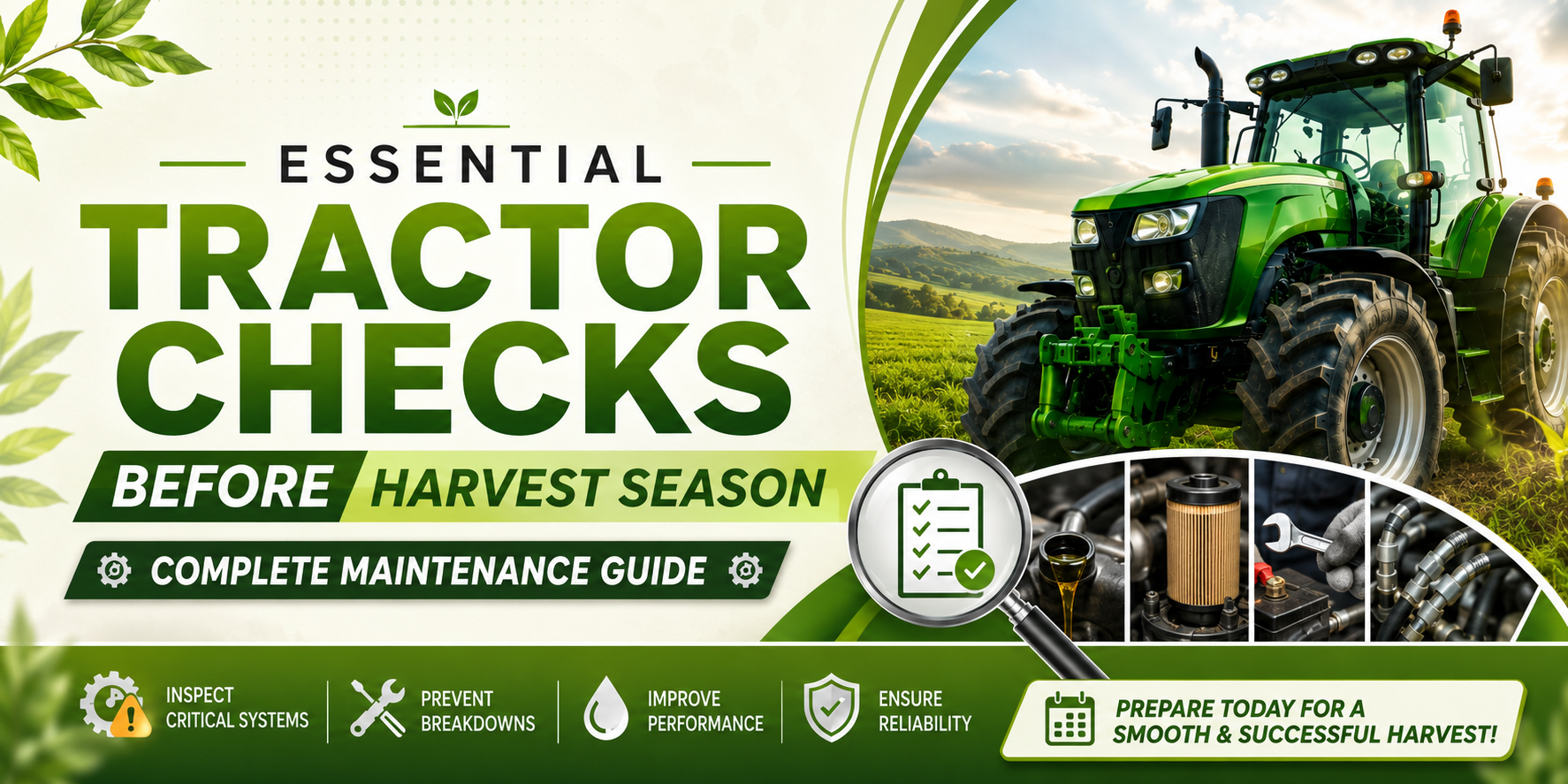
Essential Checks Before the Tractor Harvest Season
Harvest season is one of the busiest and most important times of the year for farmers. After months of hard work in the fields, the final stage depends heavily on how efficiently the harvesting process is completed. During this period, tractors are used continuously for transporting crops, pulling implements, operating machinery, and handling various farm activities.
A tractor breakdown during harvest season can create serious delays, increase expenses, and affect overall productivity. This is why preparing your tractor before the harvest season begins is just as important as preparing the field itself. A few simple inspections can help identify potential issues early and prevent costly repairs when the machine is needed most.
Many tractor problems do not appear suddenly. Worn components, low fluid levels, damaged filters, or weak hydraulic systems often show warning signs before they fail completely. By performing essential checks before the harvest season, farmers can improve reliability, reduce downtime, and ensure smooth operations throughout the busiest weeks of the year.
Why Pre-Harvest Tractor Inspection Matters
Harvest season usually means long working hours and continuous use of equipment. Unlike regular field work, there is often little time available for major repairs once harvesting begins.
A properly maintained tractor delivers better fuel efficiency, stronger performance, and fewer unexpected breakdowns. It also reduces stress on other machine components, helping extend the overall life of the tractor.
Spending a few hours on inspection and maintenance before the season starts can save days of lost work later.
Start with the Engine Condition
The engine is the heart of the tractor and should always be the first area inspected. If the engine is not performing efficiently, every other system will be affected.
Look for signs such as unusual noise, excessive smoke, difficulty starting, or loss of power. These symptoms may indicate worn engine components, clogged filters, or fuel system issues.
Checking the engine before harvest allows enough time to address any concerns and avoid interruptions during critical farm operations. It is also the ideal time to understand the best time to replace tractor engine components before heavy seasonal use.
Inspect Engine Oil and Filters
Engine oil plays an important role in reducing friction and protecting moving components from wear. During harvest season, tractors often run for longer periods, which increases the importance of proper lubrication.
Check the oil level and condition before the season begins. If the oil appears dirty, thick, or overdue for replacement, it should be changed immediately.
Oil filters should also be inspected and replaced if necessary. Clean oil and filters help improve engine performance and support long-term reliability.
Check the Air Filter
Harvest season often creates dusty working conditions. Air filters prevent dust and dirt from entering the engine and causing damage.
A clogged air filter can reduce airflow, increase fuel consumption, and lower engine performance. In severe cases, excessive dust can enter the engine and cause premature wear.
Inspect the air filter carefully and replace it if it shows signs of excessive dirt or damage. Farmers should also know when to replace tractor filters for better performance during demanding harvest operations.
Examine the Fuel System
A healthy fuel system is essential for consistent tractor performance during harvest operations.
Check the fuel filter, fuel lines, and fuel tank for any signs of blockage, contamination, or leakage. Dirty fuel filters can restrict fuel flow and reduce engine power.
If the tractor has been sitting unused for an extended period, it is a good idea to inspect the fuel system thoroughly before putting the machine back into heavy service.
Inspect the Cooling System
Harvest season often takes place during warm weather when tractors are already operating under heavy loads. This places extra pressure on the cooling system.
Inspect the radiator, coolant levels, hoses, and cooling fan. Look for leaks, cracks, or signs of blockage that could affect cooling efficiency.
An overheating engine can quickly lead to expensive repairs and lost working time. Ensuring the cooling system is functioning properly helps keep the tractor operating smoothly even during long workdays.
Check the Hydraulic System
Modern farming depends heavily on hydraulic systems for lifting implements, operating attachments, and controlling various agricultural functions.
Before harvest season, inspect hydraulic hoses, cylinders, seals, and hydraulic oil levels. Any sign of leakage or slow hydraulic response should be addressed immediately.
Common warning signs include:
- Reduced lifting power
- Slow implement movement
- Hydraulic oil leakage
- Unusual hydraulic noise
A properly functioning hydraulic system improves efficiency and reduces the risk of unexpected downtime, especially when using the recommendations covered in how to choose the right hydraulic oil for your tractor.
Examine Tyres and Wheel Components
Tyres are often overlooked during maintenance, but they have a direct impact on tractor performance and fuel efficiency.
Inspect tyres for:
- Uneven wear
- Low tread depth
- Sidewall cracks
- Improper air pressure
Incorrect tyre pressure can increase fuel consumption and reduce traction. It can also place additional stress on transmission components.
Checking wheel bearings and wheel nuts is equally important to ensure safe operation during transportation and field work.
Inspect Belts and Hoses
Belts and hoses may seem like small components, but their failure can bring tractor operations to a halt.
Inspect all visible belts for cracks, fraying, or excessive wear. Hoses should be checked for leaks, soft spots, or signs of deterioration.
Replacing worn belts and hoses before harvest is much easier and less expensive than dealing with an unexpected failure during peak working hours.
Test the Battery and Electrical System
Electrical issues can be frustrating and often occur without warning. Before harvest season, inspect the battery, wiring, switches, and lighting system.
Make sure the battery terminals are clean and secure. Test the battery charge and confirm that all electrical systems are functioning correctly.
Proper lighting is especially important if harvesting activities continue into the evening or early morning hours.
Check the Braking System
Safe operation is essential during harvest, especially when transporting heavy loads between fields and storage locations.
Inspect brake components for wear and test braking performance before beginning seasonal operations.
Signs that brakes may need attention include:
- Reduced stopping power
- Unusual noises
- Soft brake response
- Uneven braking
Reliable brakes improve both safety and operator confidence and are among the important safety parts every tractor should have for safe field and road operations.
Inspect PTO Components
Many agricultural implements depend on the Power Take-Off (PTO) system. A worn PTO shaft or damaged connection can affect implement performance and productivity.
Check PTO shafts, guards, and connections for signs of wear or damage. Proper lubrication and maintenance help ensure smooth power transfer throughout the harvest season.
Replace Worn Spare Parts Before They Fail
One of the biggest mistakes farmers make is waiting for a component to fail before replacing it.
If any part shows signs of excessive wear, replacing it before harvest can prevent larger problems later. Bearings, filters, belts, hydraulic seals, and other wear components should be inspected carefully.
Using reliable spare parts from Gropart helps ensure dependable performance and reduces the likelihood of breakdowns during critical farming operations.
Create a Simple Maintenance Checklist
A pre-harvest inspection becomes easier when farmers follow a simple checklist.
Key areas to inspect include:
- Engine condition
- Oil and filters
- Air filter
- Fuel system
- Cooling system
- Hydraulic components
- Tyres and wheels
- Belts and hoses
- Electrical system
- Brakes and PTO
Completing these checks before the season begins can significantly improve tractor reliability.
Conclusion
Harvest season is one of the most demanding periods for any tractor. Long working hours, heavy loads, and continuous operation leave little room for unexpected breakdowns. That is why performing essential checks before the harvest season begins is one of the smartest maintenance decisions a farmer can make.
Inspecting critical systems such as the engine, hydraulics, cooling system, tyres, brakes, filters, and electrical components helps identify problems before they become costly repairs. Regular maintenance not only improves performance but also reduces downtime and supports efficient harvesting operations.
By combining careful inspections with high-quality replacement components from Gropart, farmers can prepare their tractors for the demands of harvest season and ensure reliable performance when it matters most. A well-maintained tractor is not just a machine—it is an important partner in achieving a successful harvest.