 हिन्दी


Learn which farm machinery parts need regular lubrication, including tractor bearings, PTO components, bushes, pins, chains, gears, wheel bearings and more.
COD उपलब्ध नहीं है। हम केवल प्रीपेड ऑर्डर में काम करते हैं और पूरे भारत में शिपिंग करते है. COD is not available. We work in prepaid orders only and shipping PAN India.
X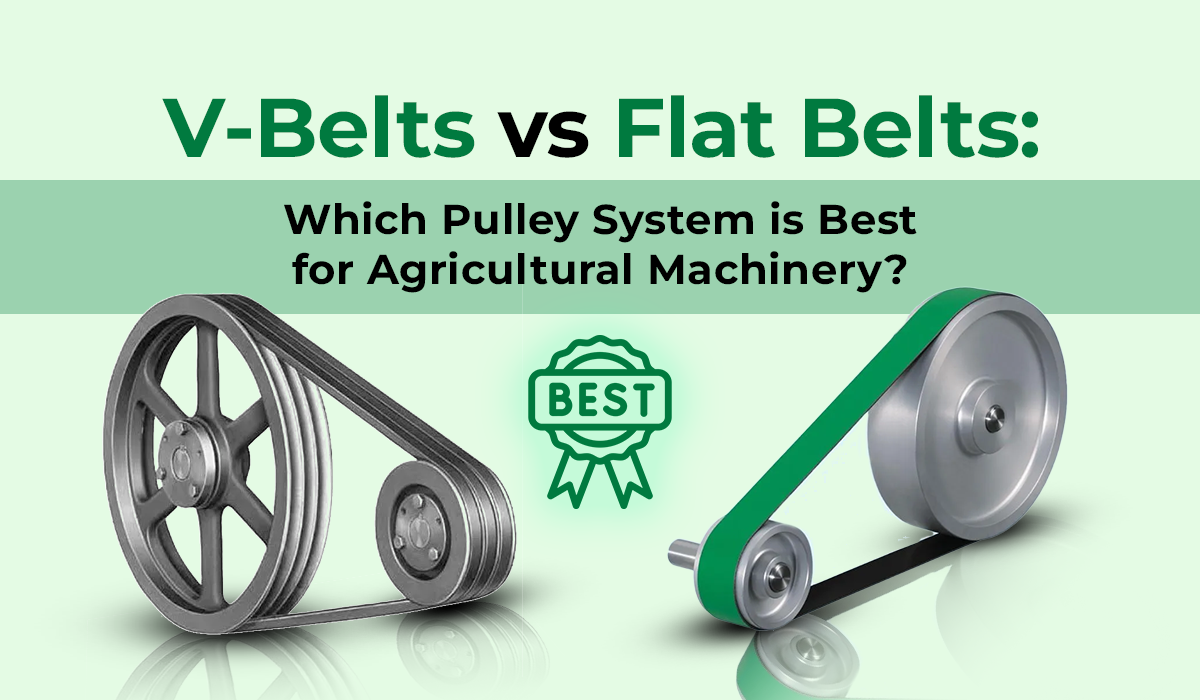
In modern agriculture, efficiency and reliability define the success of machinery. From tractors to threshers, every part counts — and one of the most vital components ensuring smooth operation is the belt drive system.
When it comes to pulley systems, the two most common types are V-belts and flat belts. Both play crucial roles in transmitting power within agricultural equipment, but their performance, maintenance needs, and efficiency levels differ.
So, which one is better suited for your farm machinery — V-belts or flat belts? Let’s dive deep into their comparison and find out.
A belt drive transfers mechanical power between rotating shafts using flexible belts and pulleys. It’s preferred in agricultural machinery because it ensures smooth operation, shock absorption, and quiet power transmission, even in demanding field conditions.
The two most common types used in agriculture are:
V-belts have a trapezoidal cross-section that fits into a V-shaped pulley groove, enhancing friction and power transfer. They are made of durable rubber compounds reinforced with fabric cords for added strength.
Flat belts are simple, rectangular belts that run over flat pulleys. They were the primary choice before V-belts became popular.
Parameter | V-Belts | Flat Belts |
Shape | Trapezoidal | Rectangular |
Grip & Friction | High | Moderate |
Torque Handling | Excellent | Limited |
Space Requirement | Compact | Bulky |
Slip Resistance | Very High | Low |
Durability | Long-lasting | Short lifespan |
Applications | Heavy-duty | Light-duty |
Maintenance | Moderate | Low |
Cost | Slightly Higher | Lower |
When it comes to power transmission efficiency, durability, and performance, V-belts are the clear winner. They handle higher torque, offer better grip, and are more reliable for modern agricultural applications.
While flat belts are still suitable for small, traditional setups, most modern tractors and equipment now rely on V-belt pulley systems to achieve consistent output.
At Gropart, we supply premium V-belts and pulley systems that ensure durability, optimal friction, and long life in tough agricultural environments.
For agricultural machinery and equipment, V-belts outperform flat belts in almost every parameter — efficiency, load handling, and reliability. They’re designed for high-torque, high-speed operations, making them the preferred choice for modern farming needs.
To ensure long-term performance, invest in high-quality V-belts and pulley systems designed for agricultural use. With Gropart’s trusted parts, your machinery will deliver unmatched reliability and power across every field season.
Because they provide high friction, durability, and efficient power transmission under heavy loads.
Yes, mainly in low-speed or light-load machines, but they’re becoming less common in modern agriculture.
Typically every 2,000–3,000 hours, depending on operating conditions and maintenance.
No. Their pulley designs differ — using the wrong type can cause slippage and equipment damage.
Visit Gropart, your trusted source for durable, high-performance agricultural machinery belts and pulleys.
Learn which farm machinery parts need regular lubrication, including tractor bearings, PTO components, bushes, pins, chains, gears, wheel bearings and more.
Learn which farm machinery parts need regular lubrication, including tractor bearings, PTO components, bushes, pins, chains, gears, wheel bearings and more.
Learn how to choose quality thresher belts by checking size, profile, construction, load, heat resistance, compatibility, tension and belt wear.
Learn about essential thresher spare parts including drums, beaters, bearings, belts, pulleys, shafts, sieves and filters for smooth machine operation