 English


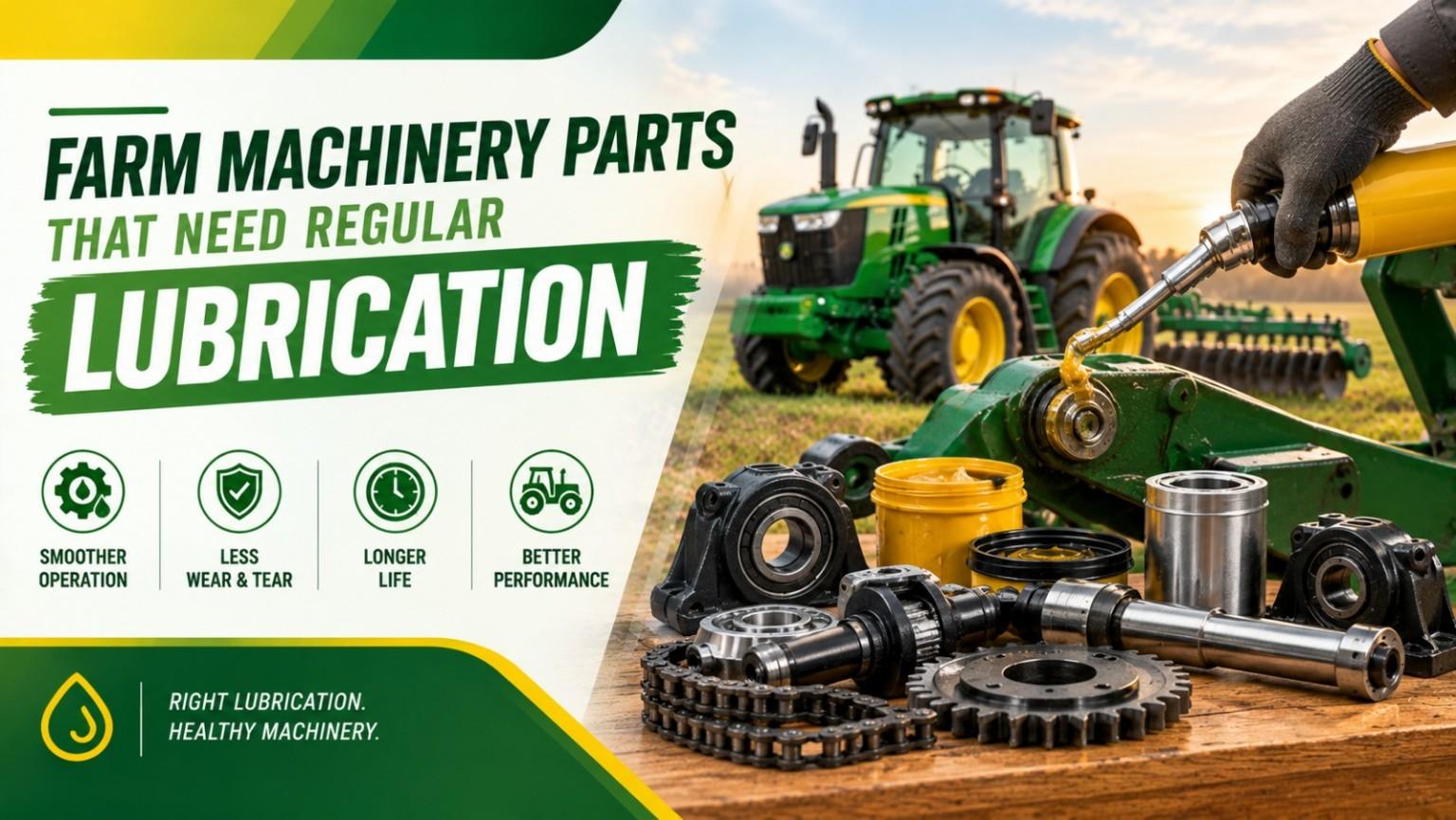
Learn which farm machinery parts need regular lubrication, including tractor bearings, PTO components, bushes, pins, chains, gears, wheel bearings and more.
COD उपलब्ध नहीं है। हम केवल प्रीपेड ऑर्डर में काम करते हैं और पूरे भारत में शिपिंग करते है. COD is not available. We work in prepaid orders only and shipping PAN India.
X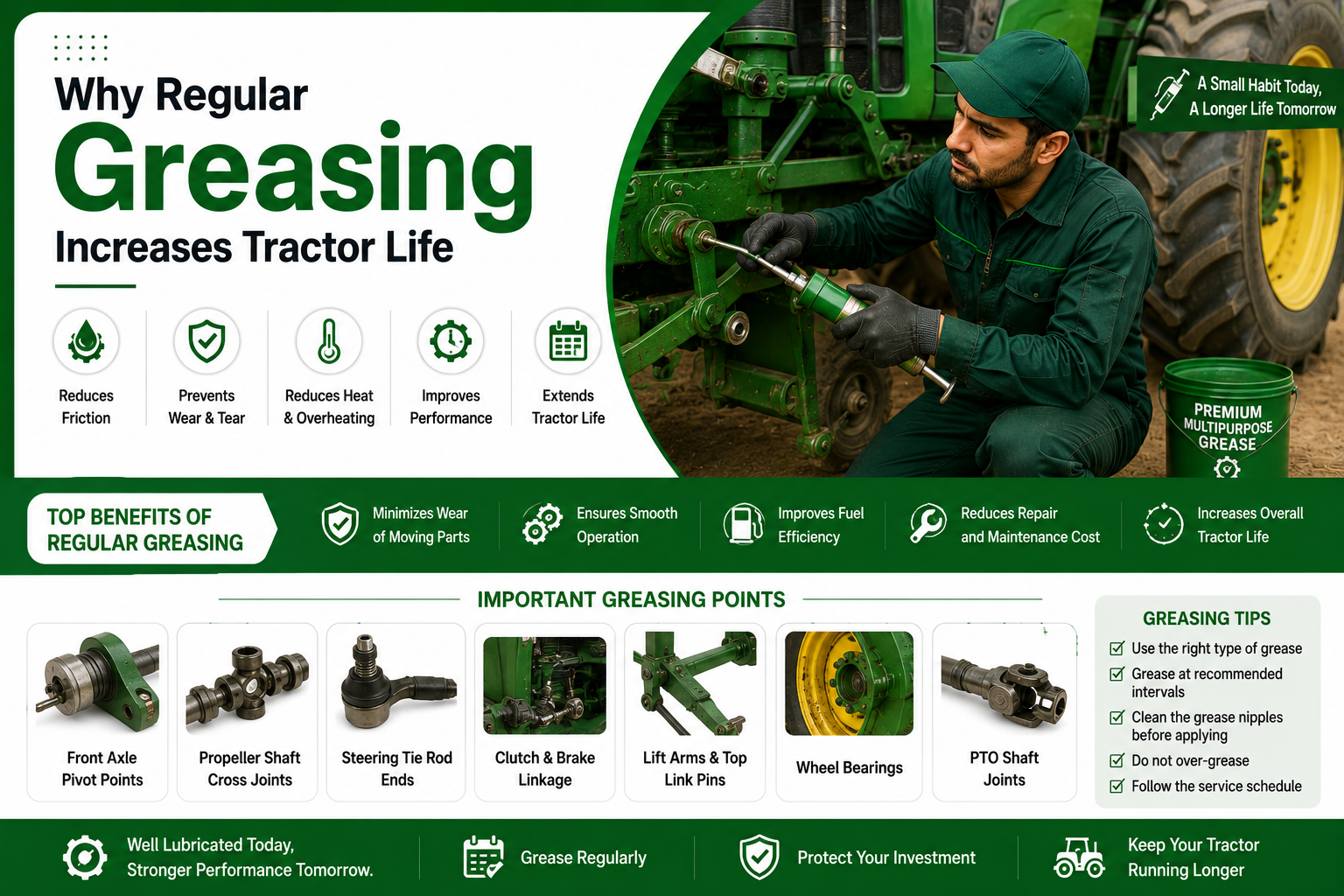
A tractor is one of the most valuable machines on any farm. It performs multiple tasks throughout the year, from land preparation and sowing to harvesting and transportation. Because tractors work in demanding conditions such as dust, mud, heat, and heavy loads, their moving parts experience continuous friction and wear.
While many farmers focus on changing engine oil, replacing filters, and servicing the engine, one maintenance practice that is often overlooked is regular greasing. Greasing may seem like a small task, but it plays a major role in keeping a tractor running smoothly and extending its overall lifespan.
Many costly repairs that occur in tractors can be linked to insufficient lubrication of moving components. Regular greasing helps reduce friction, protect important parts, and improve machine efficiency. Understanding why greasing matters and how it affects tractor performance can help farmers reduce maintenance costs and avoid unnecessary breakdowns.
Greasing is the process of applying lubricant to moving components that experience continuous friction during operation. Unlike engine oil, which circulates inside the engine, grease remains in place and provides long-lasting lubrication to specific parts.
Tractor grease creates a protective layer between metal surfaces, reducing direct contact and preventing excessive wear. It also helps protect components from moisture, dirt, and corrosion.
Without proper greasing, moving parts begin to wear out faster, resulting in poor performance and expensive replacements.
Every tractor contains dozens of moving components that operate under pressure. As these parts move against each other, friction is created.
Excessive friction can cause:
Grease acts as a barrier between moving surfaces, reducing friction and helping components move smoothly. This simple protection significantly increases the life of many tractor parts.
Several tractor components depend on proper greasing to function efficiently. These parts often experience heavy loads and continuous movement during daily operations.
Common greasing points include:
These components can wear out quickly if grease is neglected for long periods.
One of the biggest benefits of regular greasing is reduced wear on critical components.
When metal parts operate without adequate lubrication, they rub directly against each other. Over time, this creates scratches, heat, and material loss. Eventually, the affected parts become loose, damaged, or completely unusable.
Proper greasing minimizes this contact and helps maintain smooth operation. As a result, parts last longer and require fewer replacements throughout the tractor's life.
Agricultural environments are full of dust, soil, crop residue, and other contaminants. These particles can easily enter moving joints and bearings during operation.
Grease acts as a protective barrier that helps keep contaminants away from sensitive surfaces. It seals small gaps and reduces the chances of dirt entering critical components.
This protection becomes especially important during dry seasons when tractors operate in extremely dusty conditions, highlighting how weather conditions affect tractor spare parts life over time.
Moisture is another common threat to tractor components. Rain, irrigation water, humidity, and washing can expose metal parts to conditions that promote rust.
Grease helps protect metal surfaces by creating a layer that prevents moisture from reaching them directly.
This protective coating helps reduce corrosion and extends the service life of important tractor parts, especially those exposed to outdoor conditions.
A tractor's steering system contains several moving joints that require regular lubrication. When these joints become dry, steering can feel stiff and less responsive.
Proper greasing helps steering components move smoothly and reduces unnecessary strain on the system. This improves operator comfort and allows better control during field operations.
Smooth steering is especially important when working in tight spaces or transporting heavy loads, making steering components one of the important safety parts every tractor should have.
Bearings are among the most important components in any tractor. They support rotating parts and help reduce friction between moving surfaces.
Without adequate grease, bearings can overheat, wear out quickly, and eventually fail. Bearing replacement can be expensive and may lead to downtime during important farming activities.
Regular greasing helps maintain bearing performance and significantly extends their operational life.
The Power Take-Off (PTO) system transfers power from the tractor to various agricultural implements. Many PTO shafts contain universal joints and moving parts that require proper lubrication.
Greasing these components regularly helps:
This is particularly important for farmers who frequently use implements such as rotavators, threshers, and balers.
When moving parts operate smoothly, the tractor requires less effort to perform its tasks. Reduced friction means less energy is wasted overcoming resistance.
As a result, regular greasing can contribute to:
While greasing alone may not dramatically change fuel consumption, it helps ensure that the tractor operates at its full potential.
Many tractor owners wait until problems become noticeable before checking lubrication points. However, the machine often provides warning signs when greasing is overdue.
Some common indicators include:
Addressing these signs early can help prevent expensive repairs later, just as knowing the best time to replace tractor engine components helps avoid major breakdowns.
The ideal greasing schedule depends on the tractor model, workload, and operating conditions. Tractors used daily in dusty or heavy-duty environments generally require more frequent greasing.
Many manufacturers recommend greasing specific points after a certain number of operating hours. Following the maintenance schedule provided in the owner's manual is always the best approach.
Regular inspections can also help determine whether additional greasing is necessary.
Not all greases provide the same level of protection. Using low-quality grease may result in poor lubrication and shorter component life.
A quality grease should provide:
Selecting suitable maintenance products helps maximize the benefits of regular greasing and ensures better long-term performance.
Even with proper greasing, worn or damaged components eventually require replacement. Using reliable spare parts is important for maintaining performance and preventing recurring problems.
Quality replacement parts from Gropart are designed to handle demanding agricultural conditions and provide dependable performance, especially when combined with proper practices on how to store tractor spare parts properly.
Regular maintenance and quality spare parts work together to keep farm equipment operating efficiently throughout the year.
Regular greasing is one of the simplest and most effective ways to extend tractor life. It reduces friction, prevents premature wear, protects against dust and moisture, and helps important components operate smoothly. Despite being a small maintenance task, greasing has a significant impact on the overall reliability and performance of agricultural machinery.
By following a proper greasing schedule, inspecting lubrication points regularly, and using quality maintenance products, farmers can avoid unnecessary repairs and improve machine efficiency. Components such as bearings, steering joints, PTO shafts, and linkage systems all benefit from proper lubrication.
When regular greasing is combined with dependable spare parts from Gropart, tractors remain productive, reliable, and ready for demanding farm work. Investing a little time in lubrication today can help save substantial repair costs and extend the life of your tractor for many years to come.
Learn which farm machinery parts need regular lubrication, including tractor bearings, PTO components, bushes, pins, chains, gears, wheel bearings and more.
Learn which farm machinery parts need regular lubrication, including tractor bearings, PTO components, bushes, pins, chains, gears, wheel bearings and more.
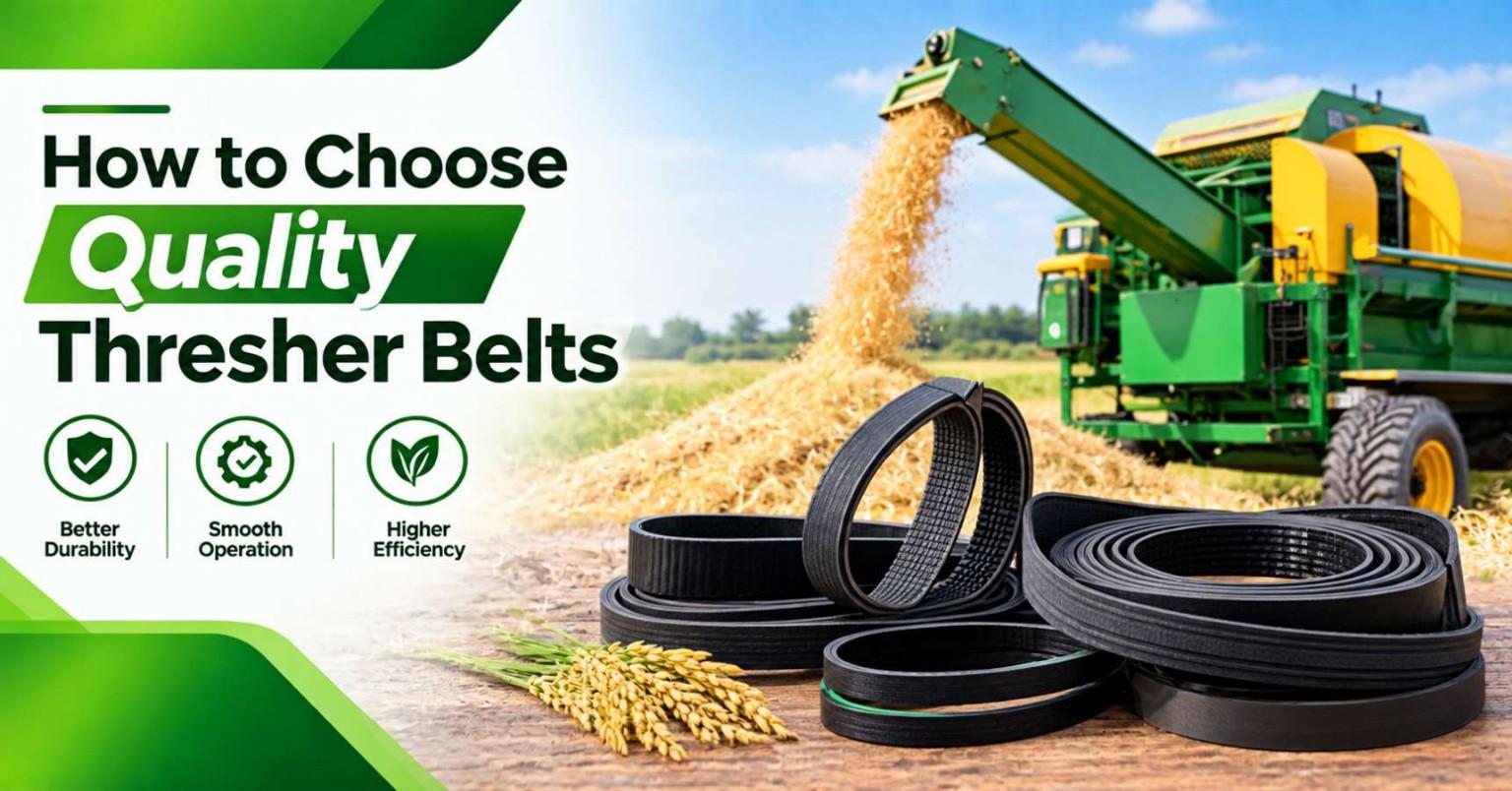
Learn how to choose quality thresher belts by checking size, profile, construction, load, heat resistance, compatibility, tension and belt wear.
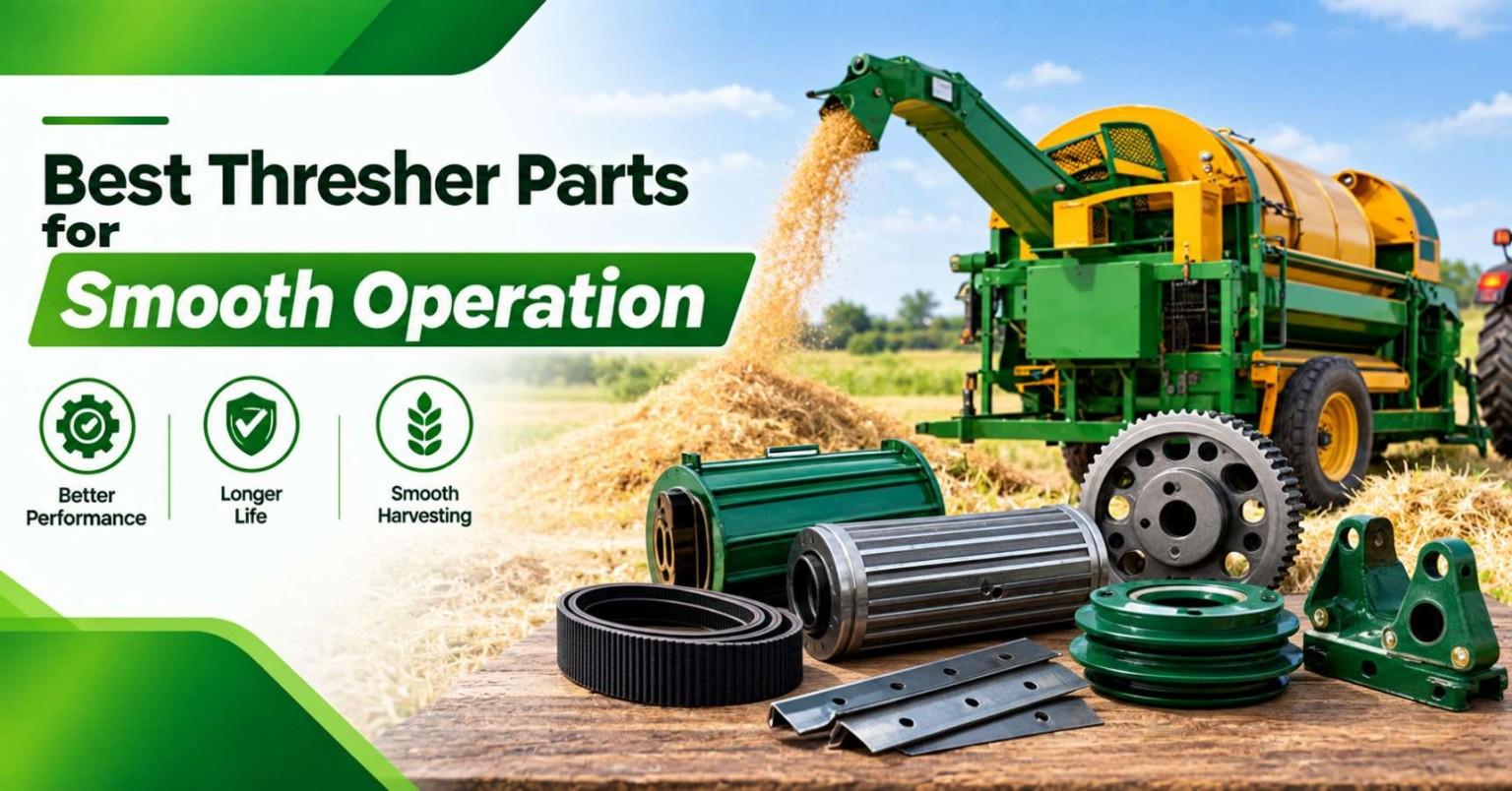
Learn about essential thresher spare parts including drums, beaters, bearings, belts, pulleys, shafts, sieves and filters for smooth machine operation