
Learn about common JCB bucket problems, including worn teeth, damaged cutting edges, loose pins, hydraulic faults, and t...
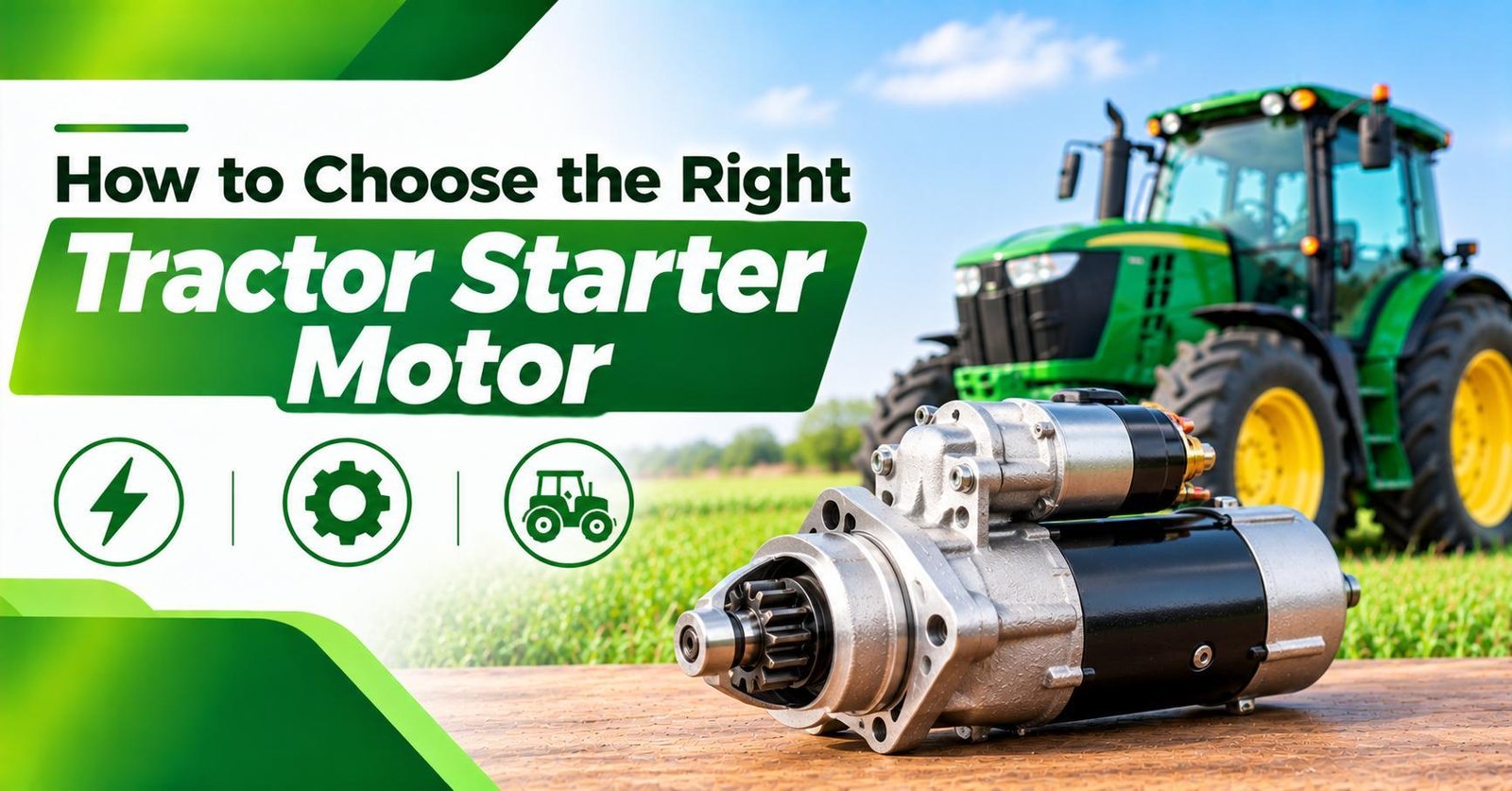
A tractor starter motor is an important part of the engine starting system. It helps turn the engine over when the driver turns the ignition key or activates the starting switch. If the starter motor is weak, damaged, or incompatible with the tractor, starting may become difficult or impossible.
Choosing the right tractor starter motor is important for reliable performance, especially during busy farming seasons when tractors need to be ready for daily fieldwork. However, not every starter motor fits every tractor. Factors such as the tractor model, engine specifications, voltage, mounting arrangement, and electrical connections must be checked before buying a replacement.
In this blog, we will explain how to choose the right tractor starter motor, identify common warning signs, and understand what to check before purchasing a replacement.
A starter motor is an electric motor that helps start a tractor's engine. When the starting system is activated, the motor uses electrical power from the battery to rotate the engine until combustion can begin.
The starter motor works with other components, including the battery, starter solenoid, ignition switch, wiring, and starter drive mechanism. If any of these components develops a fault, the tractor may experience starting problems.
A suitable starter motor should match the tractor's original specifications and provide the required cranking performance.
The first step in choosing the right tractor starter motor is identifying your tractor's exact make and model. Different tractors can use different starter motors, even when their engines have similar capacities.
Before purchasing a replacement, collect the following information:
The original starter motor's label or part number can be especially helpful. If the label is damaged or unreadable, consult the tractor's parts catalogue or an authorised service professional.
Avoid choosing a starter motor based only on the tractor's brand or appearance. Correct identification helps reduce the risk of ordering an incompatible part.
Voltage is one of the most important specifications to check when selecting a tractor starter motor. The starter motor must be compatible with the tractor's electrical system.
Many tractors use a 12-volt starting system, while some older or specialised machines may use different electrical configurations. The correct voltage depends on the tractor's original design.
Installing a starter motor with an incorrect voltage rating can cause poor operation or damage to electrical components.
Check the existing starter motor's rating and confirm it against the tractor manufacturer's specifications. Do not assume that every tractor uses the same voltage simply because the machines look similar.
The starter motor needs sufficient power to rotate the engine during starting. The required cranking performance depends on factors such as engine size, engine design, compression, and operating conditions.
A starter motor that does not meet the required specifications may struggle to turn the engine. This can be especially noticeable when starting a tractor in cold weather or after long periods without use.
When comparing starter motors, check the manufacturer's specifications for power output and compatibility with the engine.
A higher power rating does not automatically make a starter motor the best choice. The replacement must match the original system's requirements, mounting arrangement, and electrical characteristics.
A starter motor must fit securely into its designated mounting position. Even a motor with the correct voltage may not work properly if its mounting arrangement differs from the original component.
Before buying, compare the following details:
Correct mounting helps the starter motor align with the engine's flywheel and starter ring gear.
Never force a starter motor into place if the mounting holes do not align or the housing does not seat correctly. Incorrect fitment can damage the starter, mounting area, or related components.
The starter drive gear, often called the pinion gear, engages with the engine's ring gear during starting. This engagement allows the starter motor to rotate the engine.
The number of teeth, gear dimensions, and engagement arrangement must be compatible with the tractor's engine and flywheel assembly.
If the starter drive gear does not match the original design, it may fail to engage correctly or cause abnormal noise and premature wear.
Before purchasing a replacement, compare the starter drive specifications with the original part or the manufacturer's parts information.
If the starter motor makes a grinding sound during starting, the problem may involve the pinion gear, ring gear, mounting alignment, or another part of the starting system. The complete assembly should be inspected rather than replacing the starter motor without checking the cause.
Starter motors connect to the tractor's electrical system through power terminals and, depending on the design, control connections for the solenoid or starting circuit.
The replacement must have compatible terminal positions, sizes, and connection arrangements. Incorrect connections can create installation difficulties or electrical problems.
Before purchasing, check:
Also inspect the battery cables and terminals for corrosion, looseness, or damage. A poor electrical connection can cause symptoms similar to a failing starter motor.
Always disconnect the battery according to the tractor manufacturer's safety procedure before inspecting or working on starter wiring.
The starter motor and starter solenoid work together, but they perform different functions.
The starter motor provides the rotation needed to turn the engine. The solenoid is an electrically operated switching component that controls high-current power to the starter motor and, in many designs, helps move the starter drive into engagement.
A clicking sound when starting does not always mean the starter motor itself has failed. It may indicate a weak battery, loose cable, faulty solenoid, poor connection, or a problem with the starter motor.
Similarly, if the starter motor does not respond at all, the fault may be in the ignition switch, safety interlock, wiring, battery, or another part of the starting circuit.
A proper diagnosis can prevent unnecessary replacement costs.
The quality of a replacement starter motor matters because the component handles substantial electrical current and mechanical load during starting.
When comparing products, review the manufacturer's specifications, product identification, build quality, warranty terms, and supplier support. Ask for compatibility confirmation if you are unsure whether the starter motor suits your tractor.
A suitable replacement should meet the required electrical and mechanical specifications. Avoid choosing a product based on price alone, as incorrect fitment or poor-quality components may lead to repeated starting problems.
Gropart provides spare parts for tractors, JCB machines, threshers, and other agricultural machinery applications. When sourcing a tractor starter motor, confirm the product specifications and fitment details for your particular tractor model before ordering.
Understanding common warning signs can help you decide when the starting system needs inspection.
Clicking without engine cranking: This may be caused by a weak battery, poor cable connection, faulty solenoid, or damaged starter motor.
Slow engine cranking: The engine may turn more slowly than usual. Possible causes include a discharged battery, excessive electrical resistance, or a worn starter motor.
Grinding or unusual noises: These may indicate problems with the starter drive gear, flywheel ring gear, or starter alignment.
Intermittent starting: If the tractor starts sometimes but not at other times, the fault may involve electrical connections, the solenoid, a worn starter motor, or the starting controls.
No response when starting: This may result from a battery issue, faulty switch, safety interlock, wiring problem, or starter motor failure.
These symptoms do not prove that the starter motor needs replacement. Check the battery condition, cable connections, and starting circuit before deciding which component is faulty.
Regular maintenance can help protect the starting system and reduce unexpected breakdowns.
Keep the battery terminals clean and securely connected. Inspect the main starter cables for damaged insulation, corrosion, and loose connections. Follow the recommended battery maintenance schedule and ensure the charging system is working correctly.
Avoid holding the starter continuously for long periods. Follow the operating manual's recommended cranking duration and cooling intervals to prevent overheating.
Keep the starter motor's mounting bolts secure and investigate unusual sounds promptly. If the tractor has repeated starting problems, have the battery, wiring, solenoid, starter motor, and related components tested.
Do not open or repair electrical components unless you have the necessary skills and equipment. Starter circuits carry high current, so repairs should be performed safely.
Choosing the right tractor starter motor requires more than finding a component that looks similar to the original. You need to confirm the tractor model, voltage, power requirements, mounting dimensions, drive gear, and electrical connections.
It is also important to identify the actual cause of starting problems before replacing the starter motor. A weak battery, damaged cable, faulty solenoid, or worn ring gear can produce symptoms that appear to be a starter motor failure.
By checking compatibility, selecting a quality replacement, and maintaining the starting system properly, tractor owners can reduce avoidable breakdowns and support reliable engine starting throughout the farming season.
शेयर करें:
Learn about common JCB bucket problems, including worn teeth, damaged cutting edges, loose pins, hydraulic faults, and t...
Discover the best tractor parts for wet field conditions, including tyres, bearings, seals, hydraulic hoses and brake co...
Learn how to choose the right tractor wheel bearings by checking size, type, load capacity, quality, and compatibility f...
Learn when to replace tractor suspension parts by identifying 8 warning signs, including excessive vibration, unusual no...