

Discover the best JCB parts for rough working conditions, including bucket teeth, hydraulic filters, air filters, pins,...
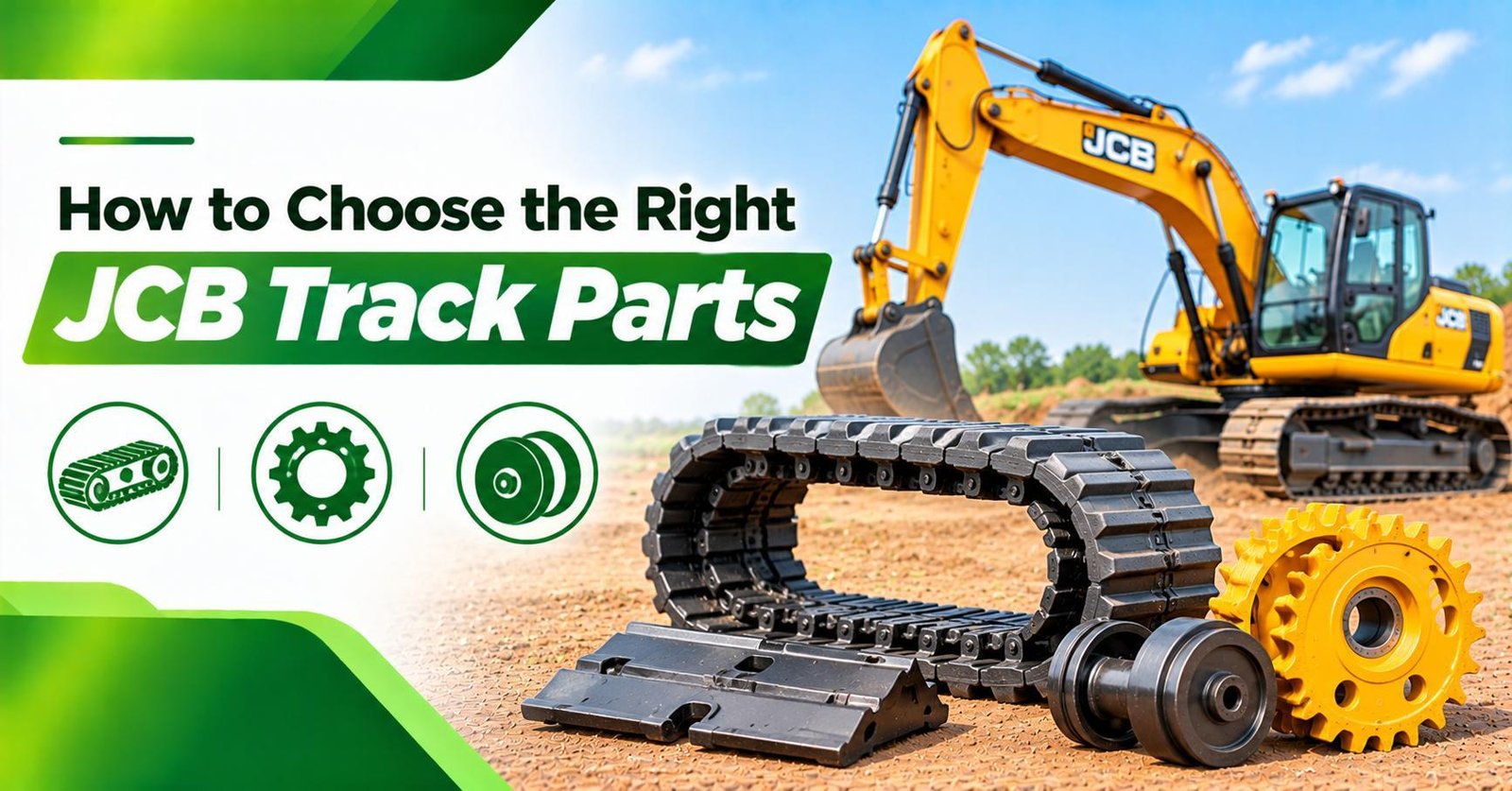
JCB machines are used across construction sites, road projects, excavation work, landscaping, and other demanding applications. Many tracked machines rely on an undercarriage system to move across uneven surfaces, maintain stability, and transfer machine power to the ground. This system includes several connected components that must work together for smooth and reliable operation.
Choosing the right JCB track parts is important for maintaining machine performance, reducing unexpected downtime, and controlling maintenance costs. Incorrectly matched components can cause uneven wear, poor track alignment, and additional stress on the undercarriage.
In this guide, we will explain how to identify the right JCB track parts, which components need attention, and what to consider before purchasing replacements.
Track components help a tracked machine travel across different surfaces while supporting its weight and operating loads. Their condition affects traction, stability, movement, and overall undercarriage performance.
When track parts become worn or damaged, the machine may experience increased vibration, unusual noise, difficulty turning, or uneven movement. Continued operation without addressing these issues can cause additional damage to related components.
Selecting compatible replacement parts and following a regular maintenance schedule helps maintain reliable machine operation.
The first step is to identify the exact model of your JCB machine. Different models can use different undercarriage designs, track dimensions, and component specifications. Even machines from the same manufacturer may require different replacement parts.
Before placing an order, collect the following information:
Use the machine identification plate and the manufacturer's parts information wherever possible. If you are replacing a component from an existing track assembly, compare its specifications with the recommended replacement.
Avoid purchasing parts based only on appearance. Two components may look similar but differ in dimensions, mounting arrangements, or compatibility.
Before choosing replacement parts, it helps to understand the purpose of the main components in a tracked undercarriage. The exact arrangement varies by machine design.
Rubber tracks: These are used on certain compact tracked machines. They provide ground contact and traction, often making them suitable for applications where surface disturbance needs to be limited.
Track chains and links: These form the connected track assembly on machines designed with chain-based undercarriages. Their condition affects track movement and overall alignment.
Track rollers: Rollers support the track and help it move along the undercarriage. Worn or damaged rollers may contribute to uneven movement and abnormal wear.
Idlers: Idlers guide the track around the undercarriage and help maintain the correct track path.
Sprockets: Sprockets engage with the track assembly and transfer drive force to move the machine.
Track shoes or pads: Depending on the design, these provide ground contact and traction. Their shape and construction influence performance on different surfaces.
Track tensioning components: These help maintain the specified track tension. Incorrect tension can increase wear and affect machine operation.
Understanding these components makes it easier to identify the damaged part and choose a suitable replacement.
Correct dimensions are essential when purchasing JCB track parts. A replacement that does not match the original specifications may not fit correctly or work reliably with the existing undercarriage.
For rubber tracks, important measurements may include track width, pitch, and the number of links, depending on the track design. For chain-based systems, relevant details may include link dimensions, pitch, shoe configuration, and compatible sprocket specifications.
When checking dimensions:
Accurate measurements reduce the risk of returns, installation delays, and additional costs.
The surface on which a JCB machine operates can influence how quickly track components wear. A machine working on smooth construction surfaces may experience different wear patterns from one operating in rocky, muddy, or abrasive conditions.
Consider the following factors when selecting track parts.
Rocky surfaces: Sharp stones and repeated impacts can damage rubber tracks, track shoes, and other exposed components. Choose parts specified for the machine and the intended application.
Mud and wet ground: Mud can accumulate around undercarriage components and affect track movement. Track design, cleaning practices, and correct tension are particularly important in these conditions.
Hard and abrasive surfaces: Continuous operation on concrete, gravel, or other abrasive materials may accelerate wear in rubber tracks and contact surfaces.
Uneven terrain: Frequent movement over rough ground places additional demands on the undercarriage. Regular inspection can help identify wear and damage before they affect machine operation.
Always check the manufacturer's recommendations before selecting a track type or replacement component for a particular environment.
Sprockets work with the track assembly to transfer drive force. As the machine operates, the sprocket teeth and mating track components can gradually wear.
Installing a new track component without inspecting the sprocket may lead to poor engagement or faster wear if the sprocket is already damaged.
Look for signs such as:
If the sprocket is worn beyond the manufacturer's limits, it may need replacement along with other affected components. The correct solution depends on the machine design and the condition of the complete undercarriage.
Inspecting related parts before ordering helps avoid replacing one component while leaving the cause of the problem unresolved.
Track rollers and idlers guide and support the track during machine movement. When these parts wear unevenly, become damaged, or develop excessive play, the track may not move smoothly.
Possible warning signs include unusual noise, visible leakage where applicable, damaged contact surfaces, or uneven track wear.
Before choosing replacement rollers or idlers, confirm the machine model, part number, dimensions, mounting configuration, and compatibility with the existing undercarriage.
It is also important to inspect surrounding components. A damaged roller or idler may be part of a broader wear issue involving track tension, alignment, or other undercarriage parts.
Track tension affects how the undercarriage operates. Excessive tension can increase stress and wear, while insufficient tension may contribute to poor tracking or the risk of the track coming off.
The correct adjustment depends on the machine model and track design. Follow the manufacturer's procedure and use the specified measurement method.
Common signs of a possible tension problem include:
Do not adjust track tension by guesswork. Incorrect adjustment can create additional problems and may expose operators to serious hazards. If the required procedure is unclear, have the adjustment performed by a trained technician.
Price is an important consideration, but it should not be the only factor when selecting JCB track parts. Component quality, material specifications, fitment, and supplier support can influence service life and maintenance costs.
Before purchasing, check:
Avoid assuming that a more expensive component is always better or that a lower-priced part offers equivalent performance. Compare the product's specifications with the requirements of your machine and working conditions.
Gropart provides spare parts for tractors, JCB machines, threshers, and other agricultural machinery applications. When sourcing track-related components, confirm the exact model and specifications with the supplier before ordering.
Regular inspections help identify worn components before they cause more extensive undercarriage problems.
Depending on the machine design, possible warning signs include cracked or damaged rubber tracks, excessive wear on track links, damaged sprocket teeth, worn rollers, unusual noises, and repeated track alignment issues.
Replacement may be necessary when a component reaches the manufacturer's wear limit, suffers structural damage, or can no longer perform its intended function safely.
Keep inspection and maintenance records to track recurring problems and identify patterns. If several components show significant wear, have the complete undercarriage inspected to determine whether additional parts also need attention.
Use this checklist before placing an order:
Taking these steps can reduce ordering mistakes and help keep the machine available for demanding work.
Choosing the right JCB track parts requires careful attention to machine identification, component dimensions, undercarriage compatibility, working conditions, and product quality. Rubber tracks, track chains, sprockets, rollers, idlers, shoes, and tensioning components all play important roles in tracked machine performance.
Regular inspections and timely replacement can help reduce unnecessary wear, prevent avoidable breakdowns, and support smoother machine movement. Before purchasing any replacement, verify the specifications and inspect related components to ensure the solution addresses the actual problem.
With the right parts and consistent maintenance, operators can support reliable undercarriage performance and improve the long-term value of their JCB equipment.
1. How do I find the right track parts for my JCB machine?
Start with the exact machine model and serial number. Check the original part number, dimensions, and manufacturer's parts catalogue to confirm compatibility before ordering.
2. Which JCB track components wear out most often?
Wear depends on the machine and its working conditions. Rubber tracks, track links, sprockets, rollers, idlers, and track shoes may require inspection and replacement as they wear.
3. Can I replace only one damaged JCB track component?
In some cases, a single component can be replaced. However, related parts should be inspected to ensure they are compatible and have not developed excessive wear. Follow the manufacturer's recommendations for the specific assembly.
4. What happens if JCB track tension is incorrect?
Incorrect tension can contribute to premature wear, poor tracking, increased mechanical stress, and track-related operating problems. Always follow the machine manufacturer's specified adjustment procedure.
5. How can I extend the service life of JCB track parts?
Inspect the undercarriage regularly, maintain the specified track tension, clean accumulated mud and debris, address unusual noises promptly, and use replacement parts that meet the machine's specifications.
शेयर करें:
Discover the best JCB parts for rough working conditions, including bucket teeth, hydraulic filters, air filters, pins,...
Learn about common JCB bucket problems, including worn teeth, damaged cutting edges, loose pins, hydraulic faults, and t...
Learn how to choose the right tractor starter motor by checking voltage, power rating, mounting design, drive gear, elec...
Discover the best tractor parts for wet field conditions, including tyres, bearings, seals, hydraulic hoses and brake co...